




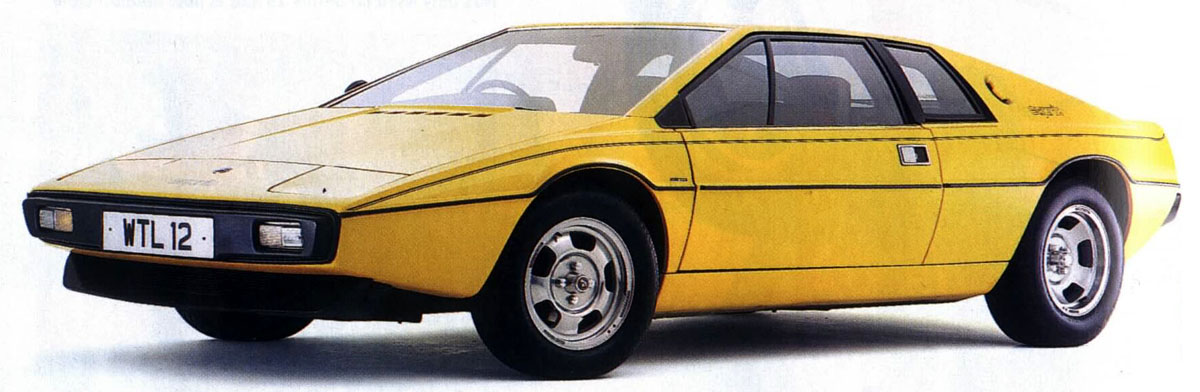
Lotus Esprit
1976-1988
Buying Guide
Classic Car, Sept 2001
The Esprit has a reputation for delivering a great driving experience
but designed-in fragility. Is it justified?
Words Richard Dredge
Photography: Tom Wood/The National Motor Museum
Sharp-edged wedges were the order of the day in the Seventies,
when Giorgetto Giugiaro’s original Lotus Esprit was unveiled
as the Silver Car concept at the Turin motor show in 1972. Based
on a Europa twin-cam chassis, it was developed to the point where
the first Esprit prototype was displayed at the 1973 Geneva salon.
It was another three years before the first customer cars were
delivered, and as was typical in the mid-Seventies, the customers
were left to finish the car’s development The Europa had
never been regarded as a particularly desirable car, having unattractive
styling and poor interior packaging. The Esprit had to address
these issues, and that the concept still looks fresh today (if
a little passe in execution) is testament to the team that produced
it.
iugiaro had wanted to call the car Kiwi, but Lotus management
was intent on a name beginning with the letter E, as is Lotus
tradition. A trawl through the dictionary came up with Esprit,
which it felt summed up the car’s prightliness.
Even before the project had been properly instigated the choice
of powerplant was never in doubt, with Lotus hailing recently
completed development of its Type 907 twin-cam engine. Mounted
ahead of the rear axle line, the unit has become one of the all-time
greats.
When the new car made its debut, Car magazine compared it with
the Countach, largely because of its dramatic, sharp edged styling.
By then Lotus was synonymous with fine-handling cars; and Car
reckoned the Esprit’s handling and performance were as sharp
as its design.
In good condition the car can still hold its own against the current
crop of junior supercars — but you have to buy wisely. —
Steve Williams is based in Windsor — his company specialises
in the servicing and maintenance of all Lotuses and he’s
our guide through the maze that is buying a Giugiaro Esprit.
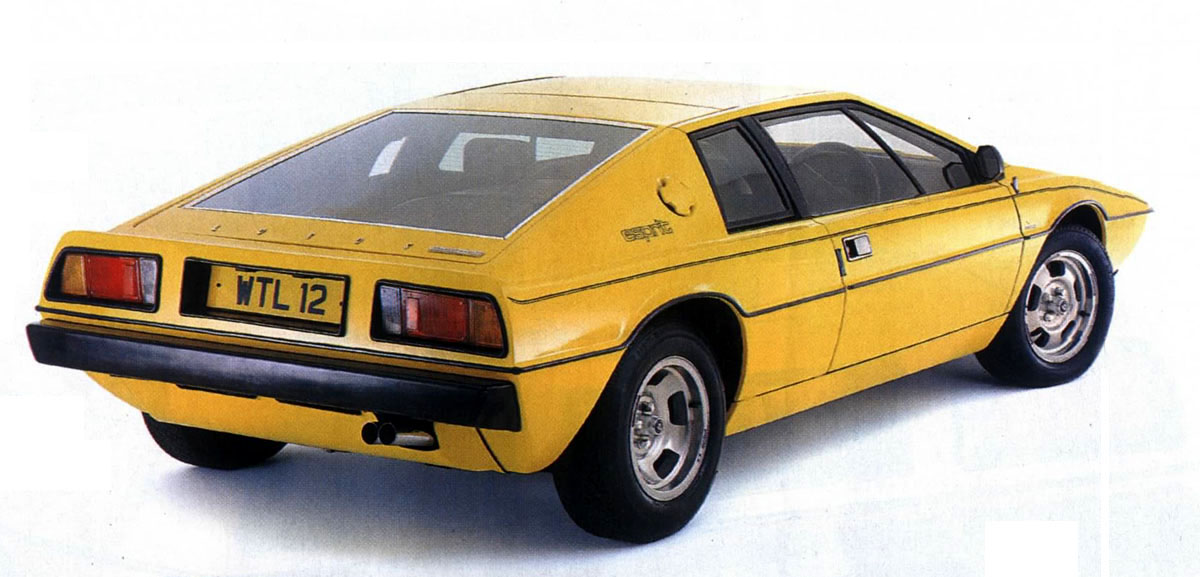
Body and chassis
Lotus’ pioneered a production method called Vacuum Assisted
Resin Injection (VARI) which created a particularly strong and
durable glassfibre shell. All its post-1975 cars use this technology,
but the shells are heavy considering their plastic construction.
The Esprit’s chassis is equally durable, but accident damage
and rot – which is mercifully rare – are not easy
to repair. The only proper solution is to fit a replacement chassis,
(they are now galvanised). The chassis itself is £1500,
but add in replacement suspension bushes, steering rack and brake
pipes and the cost doubles. Getting a specialist to replace it
will add another grand or so.
All Esprits from the S2.2 onwards are fitted with a galvanised
chassis, and many built before then have since had one fitted.
Steve comments: ‘If you’re, looking at an S1 or S2
make sure the chassis hasn’t corroded; the only way to check
is to put the car on ramps. Between the chassis and the bodyshell
there’s an insulating layer of felt, which absorbs water
then corrodes the chassis. It’s not possible to check the
top of the chassis as it’s out of sight, but if you tap
the metal with a hammer you should hear a crisp clang. If you
don’t it’s likely the metal has started to dissolve.’
Body panels are also available — in fact. if you need a
new shell it’s possible to buy one. Because the shells are
strong, the only issue with these cars is poorly repaired accident
damage. Any repairs should be completely invisible, but cracks,
splits and general unevenness all indicate the work of a bodge
artist.
While you’re inspecting the bodywork take a look at the
nearside rear wing. Loose cargo in the boot sometimes whacks the
inside of the panel leading to star-shaped cracks. The offside
isn’t similarly afflicted because the battery prevents anything
from making contact with the wing.
The Esprit’s nose is prone to stone chips, but at least
there’s no resulting rust. More serious is stone damage
to the bodywork — if the panels are hit hard enough by flying
debris, you’ll find those star-shaped cracks again. The
only way to fix this is to grind the, glassfibre back and insert
fresh matting, which is labour intensive if there’s a big
area to be treated.
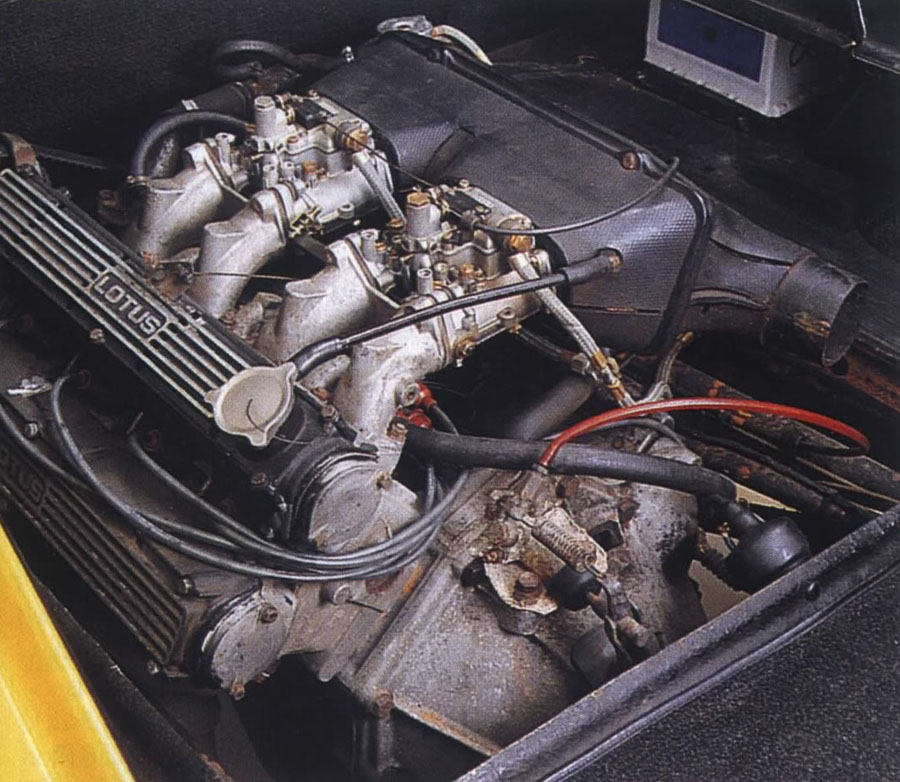
Engine
There were three versions of the all-alloy Lotus twin-cam engine
fitted to the Esprit. The 2.0-litre is designated type 907, the
2.2-litre carries the type 912 tag and the 2.2-litre turbo is
known as the type 910. All the engines will cover 100,000 miles
quite happily between rebuilds as long as 6000-mile service intervals
have been adhered to.
Engines in the Turbo HC are much stronger, with an uprated cambelt,
along with stronger carriers, covers, pistons, liners and turbo.
From here on, the pistons and liners were of Nicasil-coated aluminium,
which is more durable.
Because the oil pump is set high on the engine it takes a while
to draw the lubricant from the sump. So make sure an oil filter
with an anti drain valve has been fitted — if it hasn’t,
the big-end noise that’s inevitable for the first few seconds
will be audible for much longer. Steve warns: ‘Some owners
try to economise by fitting a Ford oil filter, which is half the
price of a genuine lotus one, but with the real thing weighing
in at just £12 and the Ford one not being up to the job.
it’s a bit of a false economy.
Expect to see 35psi at 3500rpm once the engine is up to temperature,
and at tickover don’t be alarmed if there’s just 5psi
showing on the gauge. According to the handbook, there should
be no less than 45psi with the engine singing away at 6500rpm.
All Esprit engines should have their belts replaced at 24,000-mile
intervals or every two years, so check this has been done. Servicing
should also have been carried out every six months or 6000 miles.
The 907 engine often leaks oil from the cam carriers and covers.
The oil drips onto the exhaust manifold and gets burned off —
don’t just tighten the carriers or covers as damage will
result from stripped threads and distortion. Because of these
leaks (often caused by cam cover gasket failure) the engine may
start to misfire, as the oil will collect in the spark plug recesses.
The heating and cooling cycle combined with poor cooling suffered
by the exhaust manifold causes it to crack after a while. Make
sure it’s not blowing when cold, as replacement may not
be straightforward. If you’re buying a non-Turbo you might
get away with just four hours to replace the part, but a Turbo
with problems requiring cylinder head removal could take up to
12 hours. With official Lotus dealers charging up to £75
per hour and a manifold costing anywhere between £300-400
and more, you could quickly blow a large hole in your budget.
Says Steve: ‘Its also paramount that you keep an eye on
the boost pressure gauge when you give the car a test run. The
wastegates are prone to seizing, so as well as watching that the
gauge peaks at 0.8bar, listen out to ensure it’s operating
properly You should be able to hear it quite clearly.’
Cooling systems were a constant source of development because
of overheating problems. The low-slung radiator can leak (without
it being obvious) and head gasket failure or even warped cylinder
heads are not unheard of.
All Esprit engines will run happily on super unleaded, as they
are all fitted with valve seat inserts. Steve recommends the addition
of a lead substitute to boost the octane rating and help prevent
pinking.
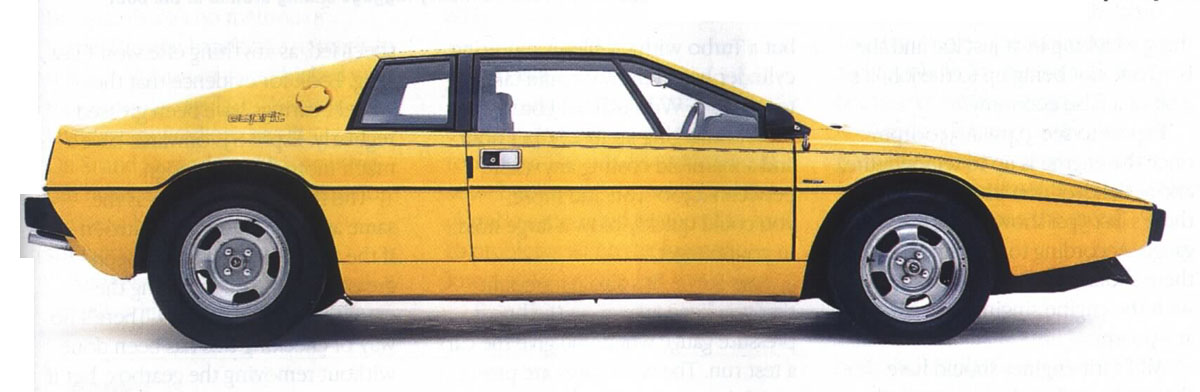
Transmission
The rear suspension design of S1 and S2 models is such that the
universal joints and (Maxi front) wheel bearings don’t last
long. Steve recommends you ask if the correct hardy-Spicer items
have been specified, as anything else won’t last long. Look
for evidence that the wheel bearings have been greased regularly.
Esprit S3s onwards have a much more durable design.
The five-speed gearbox is the same as that found in the Citroen
SM. If the spigot bearing hasn’t been greased it will fail,
wrecking the crankshaft in the process. There’s no way of
checking this has been done without removing the gearbox. but
if the owner claims that the clutch has been replaced recently,
ask if the spigot bearing was replaced at the same time.
Steering and suspension
Steering racks on S3s and later wear more quickly than on earlier
models, as the wider wheels and tyres put a greater strain on
it. Don’t expect to see more than 48,000 miles out of a
rack — a hard-driven car could eat its rack in half that
mileage and a new one will set you back £200, along with
the bill for replacement.
If the steering seems impossibly heavy it’s probably because
the universal joint on the steering column has seized, which will
cost £20 to replace (plus fitting).
The front suspension of post-1985 cars is Toyota-derived and reliable.
Before this date, the design was based on the Elan system, with
trunnions that needed regular oiling. Check the lower wishbones,
which can crack near the anti-roll bar mountings.
Brakes and wheels
Because there’s no method of lubricating the handbrake,
it tends to seize; it also tends to get kicked with monotonous
regularity because the lever is mourned on the sill. On S1 and
S2 models, the mounting can break away, but the introduction of
the S3 brought with it a strengthened mounting.
S1s were fitted with Wolfrace alloy wheels, adding to the kit
car look. From the S2 onwards Esprits were fitted with Speedline
wheels. Early S3s featured BBS wheels, which are now very hard
to source — fronts are all but unobtainable.
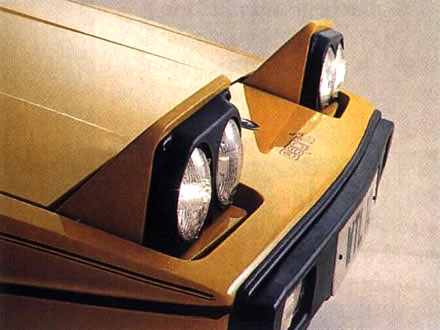
The Esprit doesn't suffer the poor electrics that often plague
glassfibre cars,
but do check headlamp relays.
Electrics
Plastic cars often have unreliable electrics, but the Esprit doesn’t
suffer too badly. The window motors can seize because of corrosion
and the glovebox-mounted fusebox can lead to problems when the
fuses get knocked by luggage, but that’s about it.
It seems that once a car starts to suffer from electrical glitches
it will get progressively worse. So if there are things starting
to go wrong, make sure you’re aware of the extent of the
problems. Headlamp relays are worth checking, as these will be
one of the first trouble-spots.
Interior trim
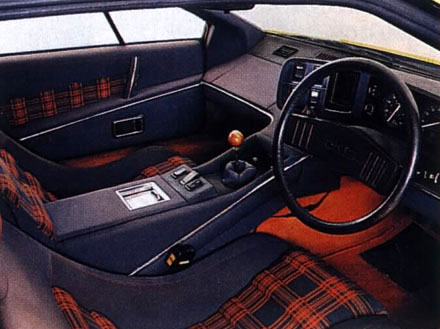
Various trim materials were used, including leather, cloth and
Marquasite, which is similar to crushed velvet. The leather trim
(available as half or full) tends to crack with age, especially
on the driver’s seat.
Essex cars were fitted with air-conditioning, and the system is
normally pretty reliable – as long as it’s been look
after.
Exterior trim
The bonded screens of S1 and S2 models were state of the art when
new, but they don’t age very well. Check if the screen has
been resealed since it came off the line — if it hasn’t,
it’ll be due before long. Resealing the screen costs £100
or so, but if the screen cracks when it’s being removed
(which is likely) the cost will quadruple. Check the dash and
footwells for deterioration because of water ingress.
Window frames for the side glass are powder-coated — but
not very well. Replacements are available but if caught in time
the metal can be refinished.
Spares
Panels are available and, as the shell is plastic, you won’t
have to worry about hidden rust. That’s not so with the
chassis, but with replacements available that’s another
thing you don’t have to worry about. The problems are with
the smaller trim items, although there’s still an amazing
amount turning up at autojumbles and through the club.
Conclusion
Rolling restorations are easy with the Esprit — if the car
you’re looking at has poor paintwork you know the bodywork
won’t deteriorate while you’re saving your pennies.
The secret, as ever, is to buy the best you can afford and be
choosy when looking. And don’t be tempted to buy an S1 just
because that’s what was in the Bond film — later models
are better screwed together.
1976 LOTUS ESPRIT S1
Engine
a 1973 cc four-cylinder in-line, 16-valve DOHC, two Dell’Orto
carburettors.
Power and Torque
160bhp @ 6200rpm
140lb ft @ 4900rpm
Transmission
Five-speed manual, rear-wheel drive
Brakes
Discs front and rear
Suspension
Front: coil over damper with unequal length wishbones, anti-roll
bar.
Rear: independent trailing arms with coil over damper
Weight
1980lb (898kg)
Performance
Top speed: 124mph
0-62mph: 8.6 sec
Fuel consumption
26mpg
Cost new
£7883
WHICH IS WHICH?
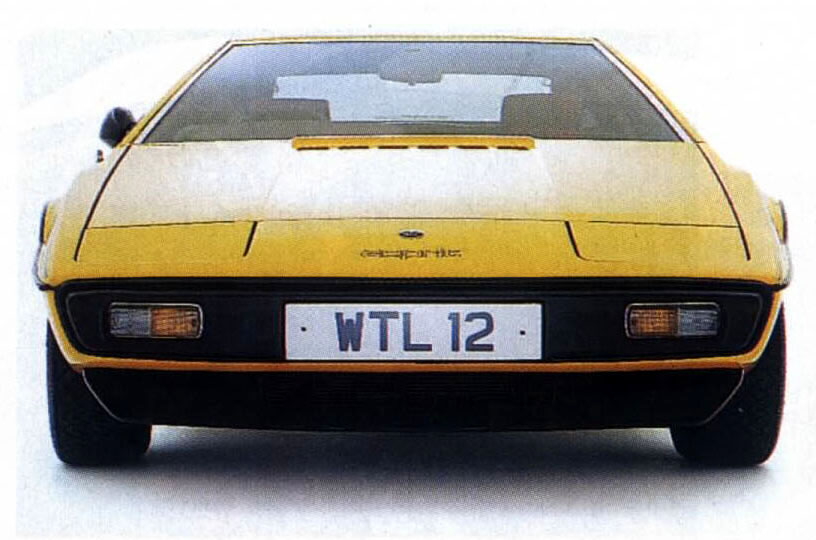
The Esprit S1 first showed its face at the 1974 Paris salon, although
promotion problems prevented it from going on sale until June
1976. It was powered by an in-house, 1973cc, aluminium engine
developing 160bhp. This was bolted directly to the chassis (so
the driveshaft could act as a suspension arm), leading to poor
levels of refinement — just 744 were built.
The S2 debuted in June 1978, featuring an improved interior, Speedline
wheels and SD1 taillights — 1,060 were produced. Power remained
at 160bhp and, to commemorate Mario Andretti becoming F1 World
Champion, 147 JPS black and gold special editions were built.
In February 1980, the engine was stroked to 2174cc and the Esprit
became the S2.2. From here on a galvanised chassis was standard,
but only 88 S2s were made. The Turbo Esprit was launched in February
1980, as the Essex. With 210 bhp it cost nearly £20,000
— 100 were planned but just 57 were made. With proper rear
suspension, the car was much smoother and quieter. Spilt-rim Compomotive
alloy wheels were fitted.
In April 1981, the normally aspirated Esprit became the S3, with
the same chassis and suspension as the Turbo for greater refinement;
767 rolled off the line. At the same time, the Turbo became a
regular production model with a reduced trim specification and
a price reduction to £16,928. Dry-sump lubrication was a
feature until 1983 — a carry-over from the Essex. 1,658
were produced. The final version of the Giugaro-designed Esprit
surfaced in 1986: the 215bhp Turbo HC, standing for High Compression.
A year later Peter Stevens’ restyled Esprit went on sale.
HOW MUCH?
Unless you’re looking for a project car (and make sure that’s
what you really want) you’re going to have to find at least
£4000 to buy an Esprit. For That money it won’t be
ready to show – or perhaps even use if it’s later
than an S2. Buying an S1 may seem very romantic if you’ve
just been watching James Bond, but the cars were troublesome then
and they’re no easier to Iive with now.
Club
Lotus member Trevor Cook bought his 1976 Esprit S1 two years ago,
having searched the UK and Ireland for a good one.
His first Lotus (Trevor had wanted an Esprit S1 since seeing one
in The Spy Who Loved Me) had to be a series 1, which are increasingly
difficult to source in good condition. With just 744 made, and
most of those exported, there aren’t many decent ones from
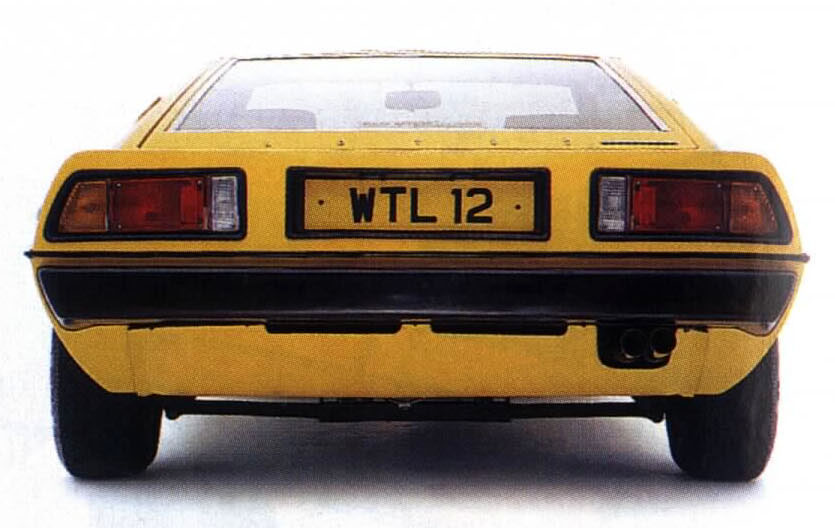
which to choose. In the end the yellow S1 pictured was bought,
with just 20,600 miles recorded, which he found just a few minutes
from his Middlesex home.
A previous owner had Lotus dealer network connections, and even
better, the car had been stored for nearly 12 years along with
bits that are hard to source — things like rolls of the
interior trim used for the seats and dash top. Although a full
interior restoration isn’t needed yet, it’s reassuring
to know such items — which normally scupper the concours
restorer — are to hand.
Apart from fettling the cooling system, the car hasn’t needed
much work. Trevor reckons there’s a bit of detailing to
be done on the fascia to make it truly outstanding and once that’s
done he hopes to use it for local club meetings.
Although his car is irreplaceable, Trevor is no longer convinced
that the S1 is the model to go for: ‘The design and build
of the S1 is abysmal. Nothing fits, whereas on the subsequent
cars things were generally sorted. I wouldn’t recommend
an S1 to anyone unless they know what they’re taking on
— but there’s no way I would be parted from mine.’
Thanks
to: Denis Milnes, Steve Williams and Trevor Cook (owner of the
Esprit S1),
members of the Berks, Bucks and Oxon region of Club Lotus