




Car Styling Quarterly No.14 April 1976
Lotus Esprit
The
contact between Colin Chapman and Giorgetto Giugiaro which resulted
in Guigiaro’s design work on the Lotus M70 project goes back
to April 1972. At the time Giugiaro was engaged on the interior design
of the M50 (Elite) for Lotus, the final proposal of which he sent
in the July of the same year. This was the beginning of the cooperation
between Lotus and Ital Design.
The heads of these two companies happened to meet by chance on the
Maserati stand at the 1972 Geneva show, held in the spring. They had
a short conversation about sports cars and then went on their separate
ways. Just one week later Giugiaro received a telephone call from
Lotus, a request to accept the commission for the design work on the
M50 and M70.
Click on image to enlarge
At Lotus the outlined their ideas about the M70, which became the
Esprit of course: A two litre mid-engined two-seater, two door car.
It had of course to be able to meet all the necessary European and
American regulations. Lotus wanted to speed the work as much as possible.
The two firms decided to aim at having a model displayed at the Turin
show, which was just two months away.
Engineers travelled regularly back and forth between Wymondham and
Turin, this was found to be a very effective time-saver. To the design
staff of Ital Design, the time pressure of the schedule was something
new, but the two companies were roused to new levels of enthusiasm
by the intensity with which their chiefs threw themselves into this
joint effort, and this made it possible for the two teams to succeed
in that small space of time. Both companies are very small in scale
and both leaders are tough, dedicated men, the best in their field,
prepared to work no matter what time it was; one session around the
plaster model, for instance, didn’t break up until 3 in the
morning.
Click on image to enlarge
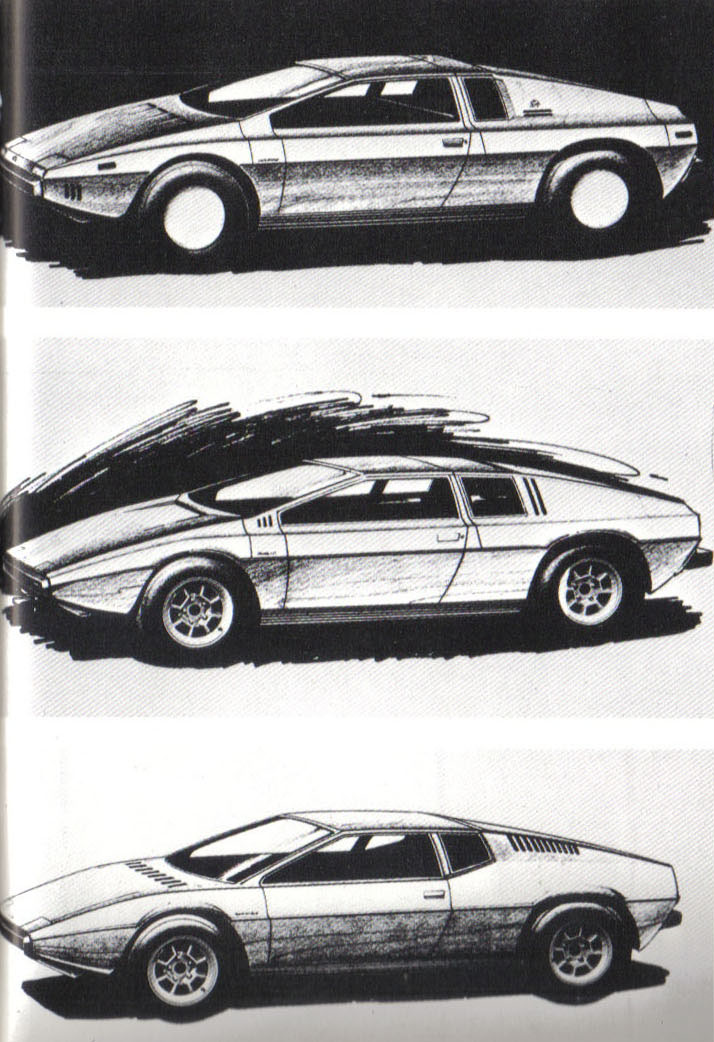
The first exterior presentation from a 1/10 rendering; clearly showing
the basic structure of the Esprit; this was adopted. While a ¼
plaster model was being prepared for wind tunnel tests, Giugiaro busied
himself with the full-size one.
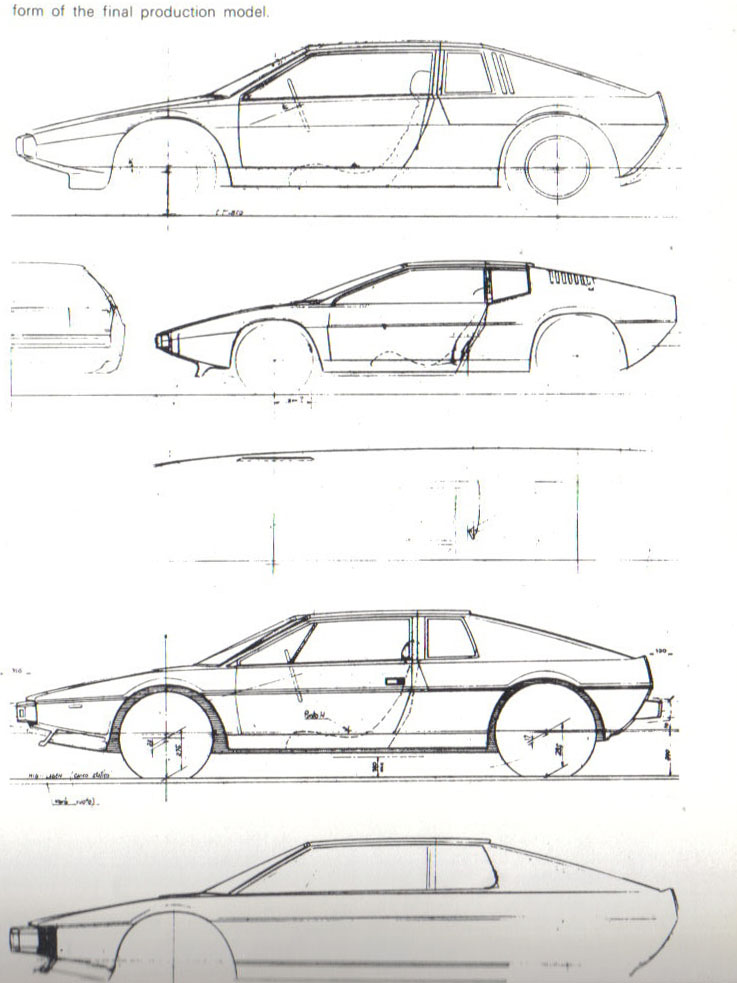
The first problem cropped up during the aerodynamic tests, which gave
poor results. Chapman had specified a drag coefficient of less than
0.34., with lift figures of less than 30kg at the front and less than
50kg at the rear. The problem was with the 22 degree rake angle of
the windscreen and the rear deck with its fully-shaped window. Complete
restudies of the body design were called for. This would delay the
program, and mean it wouldn’t be ready for the show. And Giugiaro
was faced with the possibility of having nothing on his stand.

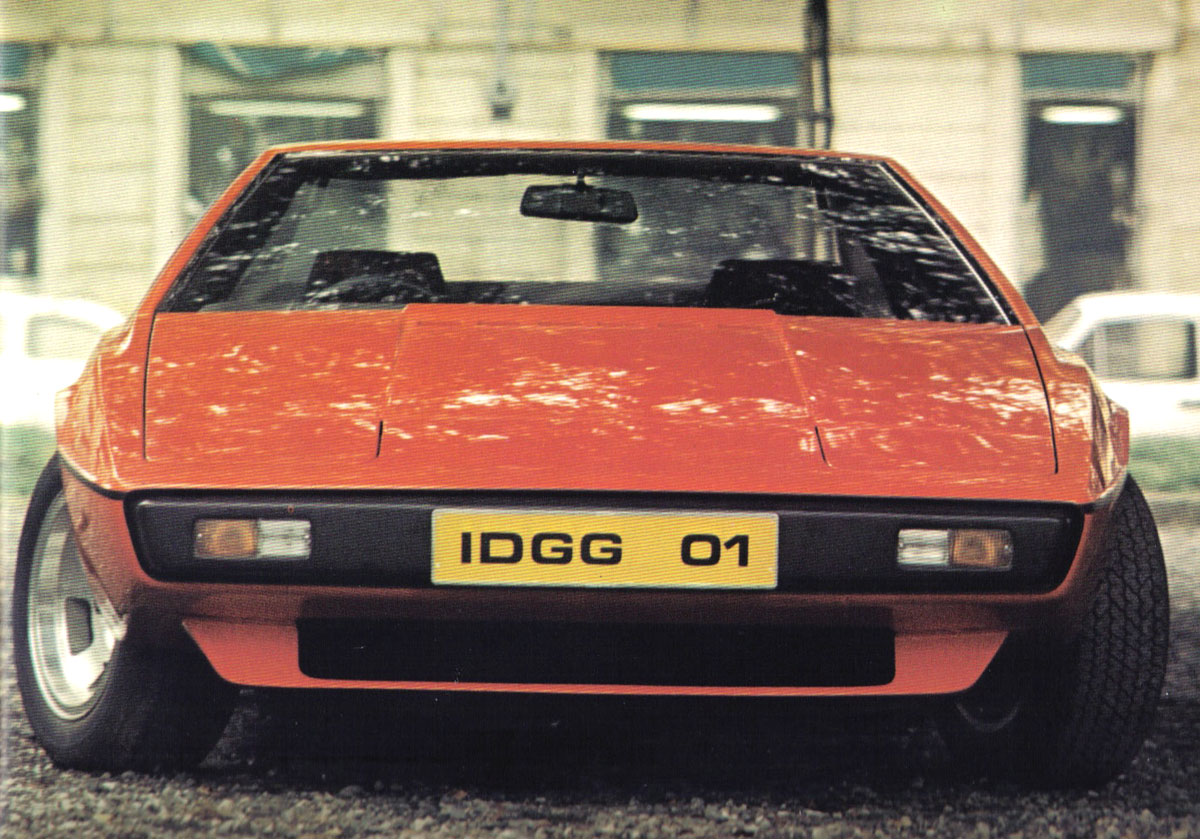
There was nothing for it but to modify the scale models and run the
tests again. Giugiaro spent two days running tests at the M .I.R.A
wind tunnel. The result though, was excellent, a drag factor of 0.297.
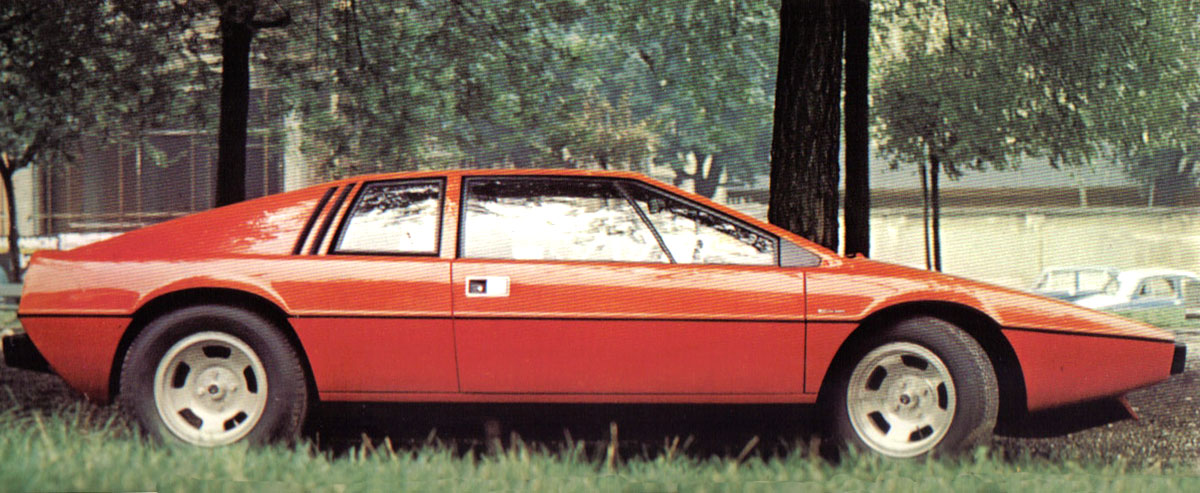
The production prototype shown here was the result of these successful
modifications. However, there was not enough time left to prepare
a show study, so they proceeded with work on the first model (this
was the ’72 Turin show design study we introduced in Car Styling
No.2. At present it is in the display hall of Ital Design’s
new headquarters). Another prototype was built for Lotus. The Turin
study was received very well. After the show Colin Chapman went over
the car very carefully, and just requested a change in the windscreen
rake angle. This was because his study of the various safety regulations,
mainly of America, had led him to the conclusion that a rake angle
of 28 degrees was necessary; which he later changed to 26 degrees,
but Giugiaro argued that this would spoil the car, and they finally
compromised on 24.5 degrees. (Federal safety standards require that
when a person sitting in the front seat leans forward, pivoting from
the hip line, the windscreen must not be the first thing his head
comes in contact with).
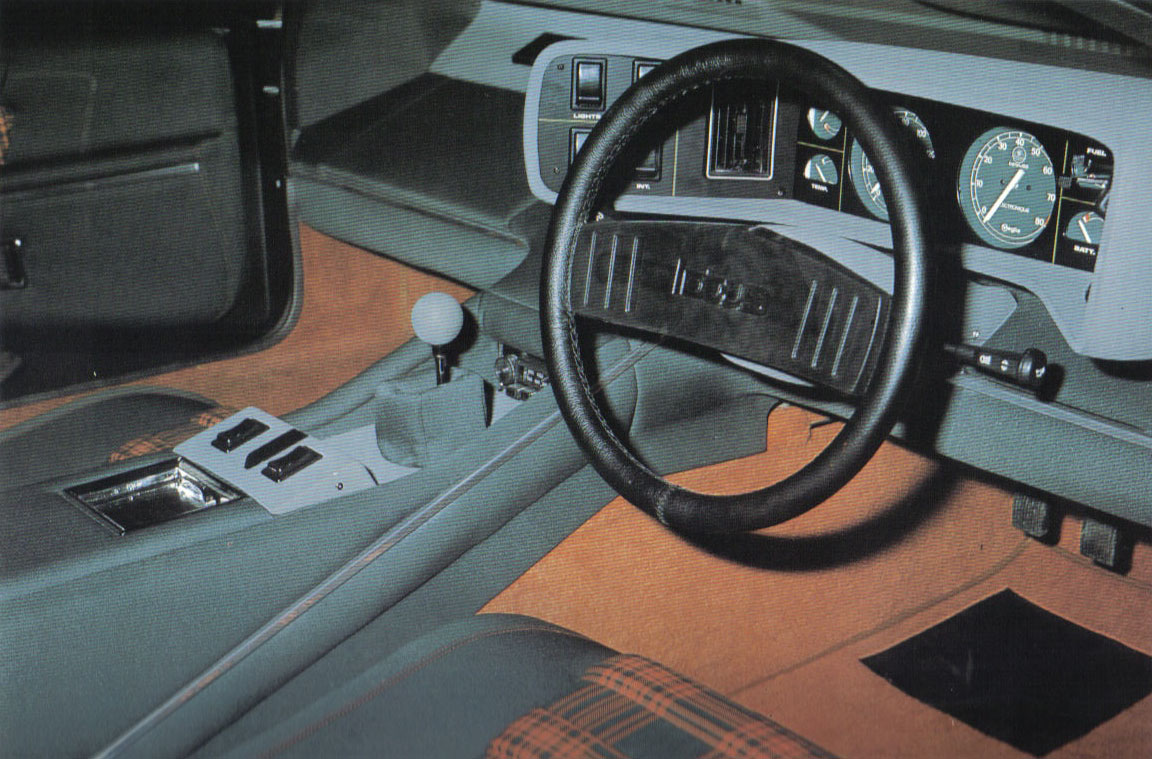
In general all the initial proposals for the interior design were
accepted. The tartan-check seat covers are a nice touch. VW, Fiat
and Porsche followed this trend, as is well known. Chapman asked for
another inch in interior height for the ’95 percentile man with
hat’ to be accommodated comfortably. Again, Giugiaro was able
to accomplish this without changing the design. The agreement between
Lotus and Ital Design had an important section stating that the Lotus
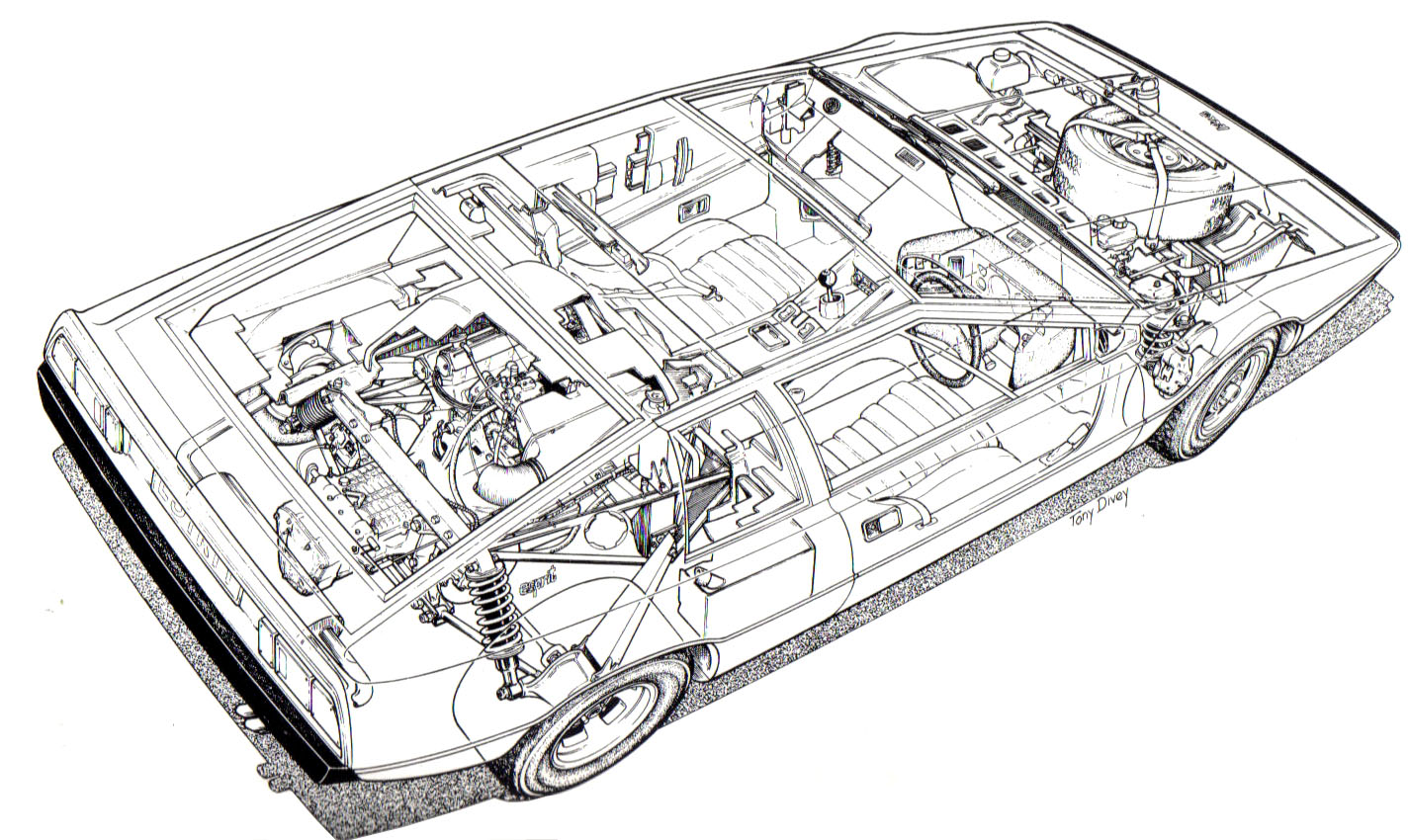
‘Clamshell’ moulding method be used for the body; this
is a low pressure injection moulded glass fibre process. This method
is simply like two halves of a shell, an upper and a lower one, bonded
along the waistline. This gave the Ital technical staff some problems,
but they finally solved it so well that the Lotus engineer, who was
controlling the production program, expressed admiring surprise. The
experience Ital Design gained through this became useful later when
they were commissioned to design a similarly constructed car being
developed in America by the De Lorean Corporation. As Giugiaro has
been commissioned to design a new American sports car, and he is now
engaged on the development of the mock-up.
The 16-valve DOHC 2 Litre Lotus 907 engine produces 160kph, 5-speed
gearbox, naturally, and the top gear is overdrive. Maximum speed is
138mph (222kph). Front suspension is independent double wishbone,
with telescopic dampers and coil spring units; rear is independent,
drive shaft semi-trailing beam and crosswise link, telescopic dampers
and coil spring units. 6J x 14 & 7J x 14 wheels, and Goodyear
Gran Prix tires are fitted.
The two fuel tanks hold 15 gallons (approx 60 litres) giving it a
range of about 450 miles (720 km). 7ft cubed (1982 cm cubed) total
luggage compartment space at the front and back.
The Lotus Esprit is an example of a car produced by a small group
of designers and engineers using their enthusiasm and professional
skill to the maximum. We did not have a chance to test this car, but
it will prove to be without doubt another example of that elite group
of sports cars which include Ferrari and Porsche.
Click on image to enlarge
Thanks to Wayne Barratt for this article